
Galveston's 2026 Short-Term Rental Rules, Explained
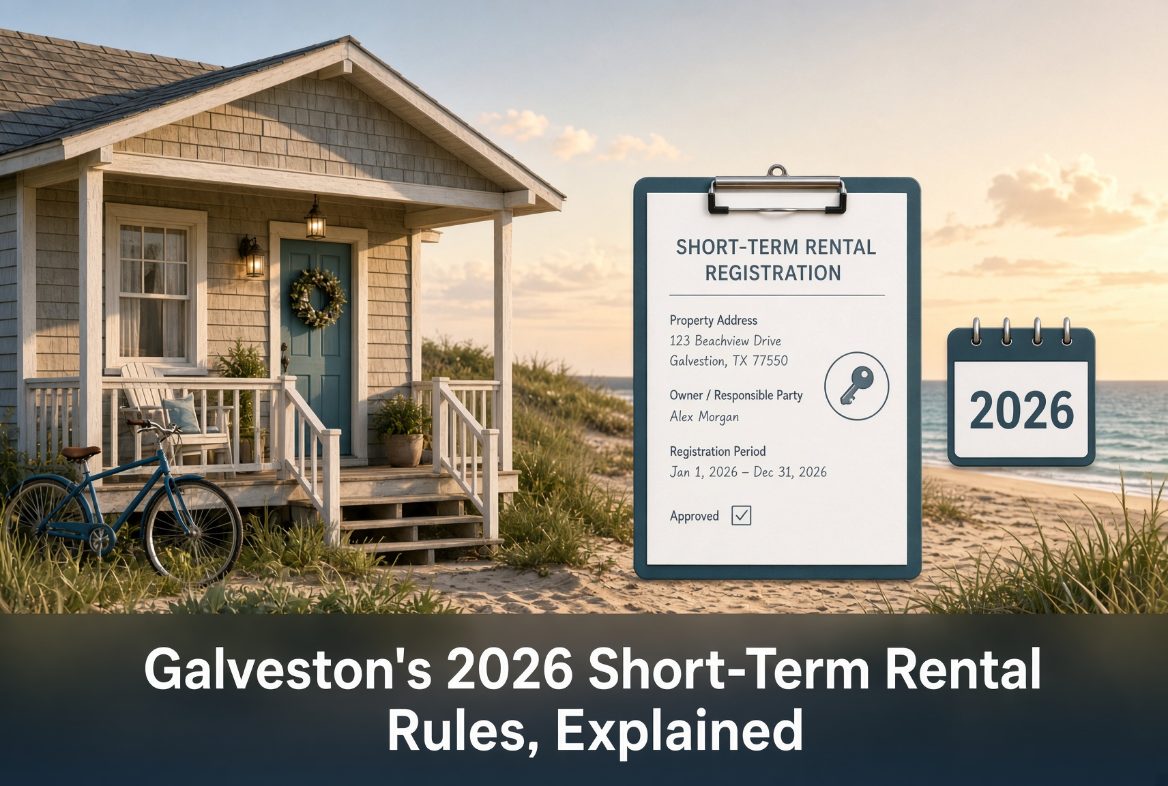
If you're evaluating a Galveston property with short-term rental income in mind, the rules changed under you in the last year. Here's what's actually in effect now, not what was true when the listing photos were taken.
Where the new rules came from
In December 2024, City Council formed an ad hoc committee to study short-term rental regulation on the island — residents, rental owners, neighborhood reps, and industry stakeholders, meeting 19 times over most of 2025. Most of what that committee recommended was adopted by City Council in November 2025, and the city also took over STR regulatory authority directly (it had previously sat with the Park Board). The updated rules took effect in January 2026.
What counts as a short-term rental
Any residential dwelling — or part of one — rented for fewer than 30 consecutive days. RVs, campers, and similar aren't covered by this ordinance.
What you now have to do to operate one
- Register annually. $250 per property, due by December 31 each year. Miss the deadline and there's a $500 late fee on top of it.
- Designate a local contact person. This person has to be reachable 24/7 and able to physically get to the property within roughly 30–60 minutes to handle emergencies, noise complaints, or guest issues. This is not a box you can check with an out-of-state property manager who can't show up same-day.
- Meet occupancy limits. Tied to bedroom count and the property's septic/sewer capacity — this was a direct response to overcrowding complaints, and the city is actively enforcing it now, not just writing it into the code.
- Provide off-street parking. Generally at least one space per bedroom; exact requirements vary by property type and location.
- Post required guest information inside the unit — occupancy limits, parking rules, noise rules, local contact info, emergency numbers, and flood-evacuation guidance.
Where you're allowed to operate one
Short-term rentals are permitted in every zoning district on the island except R-0. If you're evaluating a specific property, confirm its zoning classification through the city's Land Development Regulations before you assume STR income is even legal there.
What it costs beyond the registration fee
Galveston stacks a 15% total lodging tax on short-term rental income — 6% state Hotel Occupancy Tax plus 9% local. Platforms like Airbnb and VRBO are now required to display a valid Galveston Vacation Rental (GVR) registration number and remove listings that don't have one, so an unregistered property can't quietly operate through a marketplace listing anymore.
What happens if you don't comply
Penalties run up to $500 per offense, and up to $2,000 for health, safety, or zoning violations. Three violations at the same property within 12 months triggers license revocation under the new three-strike rule — a real consequence, not a theoretical one, and it's specific to the property, not the owner's other listings.
What this means if you're buying for rental income
Underwrite the property against the full 15% lodging tax, the $250 annual fee, occupancy caps tied to septic capacity, and the real cost of a compliant local-contact arrangement — not the gross nightly rate a listing site shows you. A chunk of investor exits on the island's West End over the past year have been driven by owners who didn't rebuild their numbers around these rules. Do that math before you make an offer, not after you've registered.
Kelli Owens is a Texas REALTOR® with The KO Realty Group, brokered by The Sears Group. TREC License #616346. This is general information, not legal, tax or insurance advice — confirm the rules, classifications and costs for your specific property with the City of Galveston and your own licensed professionals.
Send me an address. I'll confirm whether short-term rental is legal there.
The zoning classification, whether R-0 rules it out, the off-street parking the bedroom count requires, and what registration will actually cost you for the year.
Keep reading
 Galveston Landmark Commission — What You Can and Can't Change in a Historic DistrictA plain-English breakdown of what the Galveston Landmark Commission actually reviews, wha…
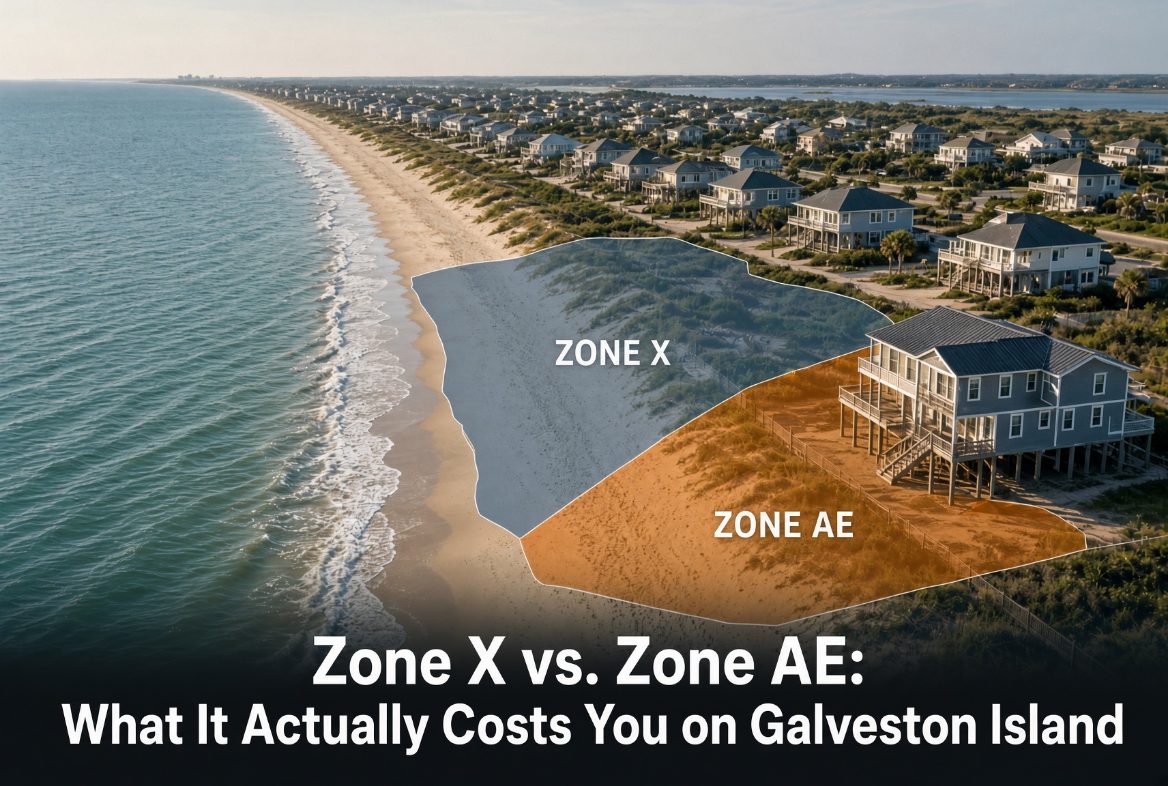 Zone X vs. Zone AE — What Flood Zone Actually Costs You on Galveston IslandAlmost every home on Galveston Island sits in some flood zone. Here's what Zone X, X500,…